Biden Drops Out of 2024 Presidential Race
 Mulaudzi Ndivhuwo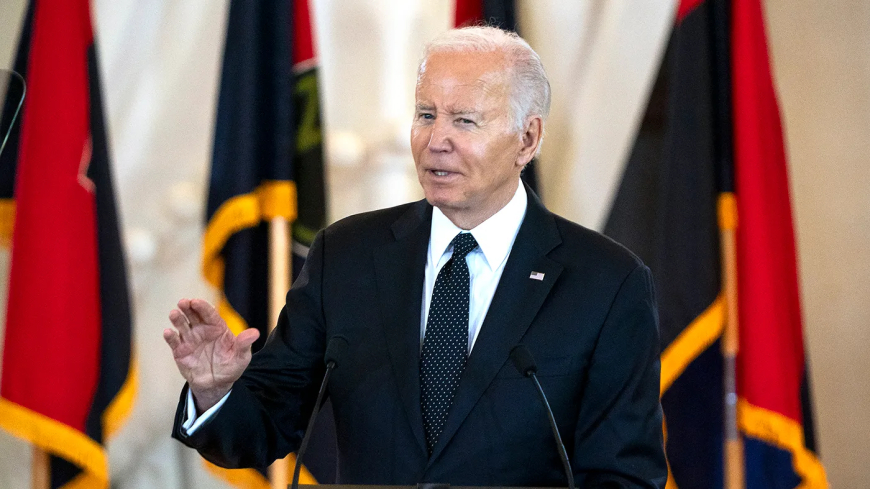
In an unexpected development, President Joe Biden announced on Sunday that he is dropping his reelection bid in the 2024 presidential race. The decision has sent shockwaves through the political landscape, reshaping the dynamics of the upcoming election and leaving many to speculate on the future of both major political parties in the United States.
President Biden’s decision to step aside comes after weeks of intense speculation and mounting pressure from within his own party. Despite his repeated refusal to bow to calls for him to exit the race, the count of Democratic lawmakers urging him to do so continued to rise. This growing chorus of voices reflected concerns about his age, his health, and his ability to lead the country for another four years. Ultimately, Biden chose to endorse Vice President Kamala Harris as his successor, signaling a shift towards a new generation of leadership within the Democratic Party.
While it’s improbable that Democrats could force Biden out without his consent—given the loyalty of convention delegates to their candidate—Democratic Party rules outline what would happen if he were to step aside before formal nomination or if there’s a vacancy on the national ticket after nomination. The party could potentially vote to change rules around candidate replacement, but state laws might complicate efforts to replace Biden on specific ballots. This scenario poses significant challenges, as any attempts to navigate the complex legal and procedural landscape could lead to political infighting and logistical hurdles.
Republican lawmakers have reacted swiftly to Biden’s decision, with many seizing the opportunity to critique his presidency. Former President Donald Trump, who is also vying for the 2024 Republican nomination, wasted no time in calling Biden the “worst president” in an interview with NBC News. Trump’s comments are indicative of the fierce partisan battles that are likely to dominate the upcoming election cycle. Meanwhile, other prominent Republicans have echoed similar sentiments, framing Biden’s exit as a sign of weakness and failure.
Within the Democratic Party, reactions have been mixed. While some members view Biden’s decision as a pragmatic move to ensure a stronger candidacy in the general election, others are concerned about the implications for party unity and strategy. Democratic Representative Adam Schiff had previously called for Biden to drop out, citing concerns about his electability. Schiff and others argued that a fresh face on the ticket could reinvigorate the party’s base and appeal to a broader range of voters. However, the process of rallying around a new candidate—particularly one as polarizing as Harris—presents its own set of challenges.
The 2024 presidential race has taken an unexpected turn, leaving both parties scrambling to adjust their strategies. As the dust settles, all eyes are now on Vice President Kamala Harris as she steps into the spotlight. Harris, who has made history as the first female, first Black, and first South Asian Vice President, now has the opportunity to further cement her legacy by becoming the Democratic nominee for president. Her candidacy will undoubtedly be scrutinized closely, as voters and political analysts alike evaluate her ability to unite the party and present a compelling vision for the country’s future.
As Harris begins her campaign, she will need to address several key issues that have dominated the national discourse, including economic recovery, healthcare reform, climate change, and social justice. Her ability to articulate clear and effective policies on these fronts will be critical to her success. Additionally, Harris will need to build a robust campaign infrastructure, engage with grassroots organizers, and leverage the support of influential party figures to mobilize voters and secure the nomination.
Meanwhile, Republicans will likely intensify their efforts to capitalize on the perceived vulnerabilities within the Democratic Party. The GOP’s strategy will likely involve a combination of attacking Harris’s record, highlighting divisions within the Democratic ranks, and presenting a unified front with a strong alternative candidate. As the 2024 election approaches, the political landscape is set to become even more dynamic and unpredictable, with both parties vying for control of the White House and the direction of the nation.
In conclusion, President Biden’s decision to drop out of the 2024 presidential race has fundamentally altered the trajectory of the upcoming election. This unexpected development has introduced new variables into the political equation, forcing both Democrats and Republicans to reevaluate their strategies and adapt to the changing landscape. As the nation prepares for what promises to be a highly contentious and closely watched election, the stakes have never been higher, and the outcome remains anything but certain.