
Brazil floods Claims Dozens of Lives and Displaces Thousands
 Bradley Chagoya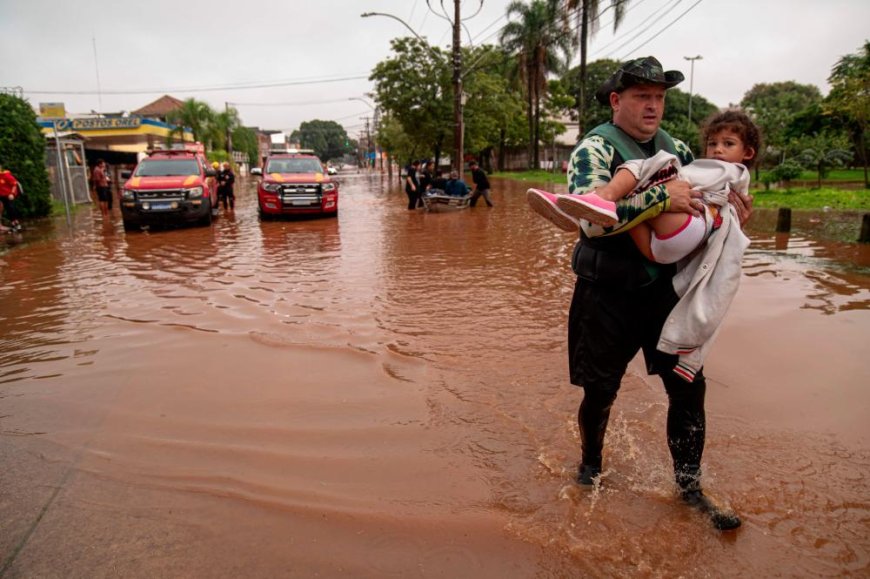
Days of relentless rain in Brazil's southernmost state have unleashed catastrophic flooding and landslides, claiming the lives of 55 individuals, as reported by local authorities. The grim toll continues to rise, with 74 people still unaccounted for in Rio Grande do Sul.
Since the onset of the storms last Saturday, approximately 25,000 residents have been compelled to flee their homes, seeking refuge from the deluge. Power outages and contaminated water sources have left nearly half a million people grappling with dire conditions, exacerbated by the looming threat of further precipitation.
Rio Grande do Sul's civil defence agency has confirmed 55 fatalities directly linked to the floods, while an additional seven deaths are under investigation for potential connections to the calamity. This unprecedented weather event stems from a convergence of unusually high temperatures, elevated humidity levels, and powerful winds.
The impact of the storms has been widespread, with over half of the state's 497 municipalities bearing the brunt of the devastation. Infrastructure damage is severe, with roads and bridges obliterated in multiple areas. Landslides have been rampant, and the collapse of a hydroelectric dam near Bento Gonçalves has claimed the lives of 30 individuals, while another dam in the vicinity teeters on the brink of collapse due to rising water levels.
In the regional capital of Porto Alegre, the Guaíba river has breached its banks, inundating streets and engulfing entire neighborhoods. The city's international airport has suspended all flights indefinitely, compounding the logistical challenges posed by the disaster.
Residents, grappling with the enormity of the destruction, lament the heartbreaking scenes unfolding around them. Maria Luiza, a local resident, expressed her sorrow, stating, "I live in this area, so I feel sorry for everyone who lives here. It's very sad, and it's regrettable that all this is happening."
In response to the crisis, Brazilian President Luiz Inácio Lula da Silva has toured the affected region, pledging assistance from the central government. Meteorologists warn of continued rainfall as a cold front traverses the region, heightening the risk of further devastation.
Last year, Rio Grande do Sul witnessed another deadly natural disaster when a cyclone claimed the lives of over 30 people. The National Institute of Meteorology attributes the heightened intensity and frequency of such events to the climate phenomenon known as El Niño.