South Africa Eyes Historic Olympic Bid — Government Confirms Talks to Host 2036 or 2040 Games as Cape Town Pushes Ahead
 Stanley Staples
South Africa has opened the door to one of the most ambitious projects in its democratic history: hosting the 2036 or 2040 Summer Olympic Games. Government officials have confirmed early-stage discussions with the International Olympic Committee (IOC), signalling a bold intention to bring the world’s biggest sporting event to African soil for the first time.
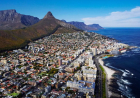
The renewed interest comes as several independent bodies, including the Cape Town–based CT2040 think tank, intensify their own feasibility research. Their findings align with a global shift in Olympic planning — one that favours sustainability, cost-efficiency and the repurposing of existing infrastructure. It’s a direction that plays directly into South Africa’s strengths.
With stadiums and transport systems built for the 2010 FIFA World Cup, the country already has a significant foundation. For Professor John Fourie, an economic historian at Stellenbosch University, this head start changes everything.
“We would want to see these beautiful stadiums that were built for the 2010 World Cup being used. There will need to be some creative thinking about an athletics stadium, but Cape Town already has almost all of the stadiums that we need,” Fourie says.
Beyond infrastructure, Fourie highlights three economic advantages that could redefine the region for a generation. An Olympic deadline forces long-delayed projects to break ground. Long-term policy stability—rare in the current climate—gives investors confidence. And a unified national objective compels government departments to pull in the same direction for the first time in years.
For the Western Cape, where rapid growth strains an already stretched infrastructure network, the Games could become the catalyst officials have been waiting for. “If we have a 10 to 15 year horizon, the Cape region certainly needs more investment in public infrastructure. This is a wonderful way to provide a catalyst for such investment and policy,” he explains.
Fourie argues that the real value of an Olympic bid has little to do with fireworks or ceremonies. Instead, it lies in the decades that follow — in the roads, rail, housing, energy upgrades and civic renewal that remain long after the athletes go home. Framed as industrial policy rather than a sporting spectacle, the bid becomes more than just an event. It becomes a nation-building strategy.
If South Africa moves forward, the world will watch closely to see whether the country can turn a daring Olympic dream into a transformative national project.