Rand Breaks Below R17/$ for First Time Since 2023 as Markets Surge on Bold Budget Shift
 Cintia Adaeze Aghaelina
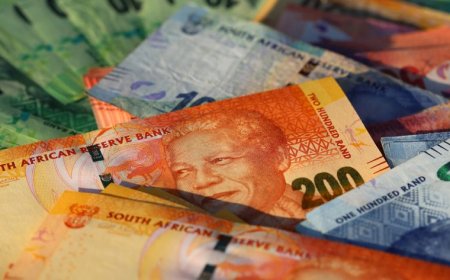
The rand broke through the R17-per-dollar mark for the first time since February 2023 as South African markets surged on Thursday, boosted by a market-friendly mid-term budget announcement that slashed the country’s inflation target and signalled a firmer fiscal outlook.
The currency strengthened as much as 0.8%, reaching its strongest level in nearly three years. Investors responded positively to expectations that the South African Reserve Bank will keep interest rates elevated for longer while inflation trends downward. The Johannesburg stock market reacted just as strongly, becoming the best-performing equity index in the world for the day, while yields on rand-denominated government bonds fell to their lowest level in seven years.
The National Treasury confirmed that South Africa’s inflation target has been lowered from 4.5% to 3%. Treasury said the adjustment is aimed at gradually reducing inflation expectations, creating space over time for interest-rate cuts that could stimulate economic growth. While the Reserve Bank has cut the repo rate twice this year, it has made it clear that further cuts will only be considered once inflation moves closer to the new 3% target.
Analysts say the rand is benefiting from both global market sentiment and South Africa’s renewed commitment to tighter inflation control. Piotr Matys, a senior FX strategist at In Touch Capital Markets, said the adjustment in the inflation target could limit the central bank’s ability to cut rates soon, which makes the rand more appealing to investors seeking higher yields. He added that the growing divergence between the Reserve Bank and the US Federal Reserve is also pushing the rand higher.
By early afternoon, the rand was trading at R16.98 per dollar, stretching its winning streak to seven consecutive days. The currency has returned more than 13% in the dollar-funded carry trade this year, aided by a weaker US dollar and several Fed rate cuts.
Foreign investment into South African government bonds has surged dramatically, with inflows reaching R175 billion for the year through October — more than double last year’s R73 billion total. Treasury is also issuing less debt at its weekly auctions, tightening supply and boosting bond demand.
Portfolio manager Anders Faergemann of PineBridge Investments said South Africa remains an attractive destination for global bond investors, adding that the country’s updated inflation target reflects stronger institutional maturity and provides a more stable environment for investment.
Yields on benchmark 2035 rand bonds fell seven basis points to 8.61%, the lowest closing level since March 2018. The yield on dollar bonds due in 2036 dropped to 6.14%.
Precious metal prices added further momentum to the rand’s surge. Gold soared above $4,000 an ounce last month, while silver and platinum prices also rallied — a major boost for South Africa, where raw commodities account for more than half of export earnings.
The FTSE/JSE All-Share Index rose as much as 2.5% on Thursday, with traders citing higher metal prices, the budget update, and expectations of a possible credit-rating upgrade from S&P Global Ratings as key market drivers. South Africa is currently rated BB- with a positive outlook, indicating that an upgrade is increasingly likely.
Anchor Capital portfolio manager Martin Smith said the medium-term budget has injected fresh optimism into the market, adding that a rating upgrade could push South African stocks even higher.