14 SANDF Soldiers Killed in DRC Expected to Arrive in South Africa Soon
 Staff Reporter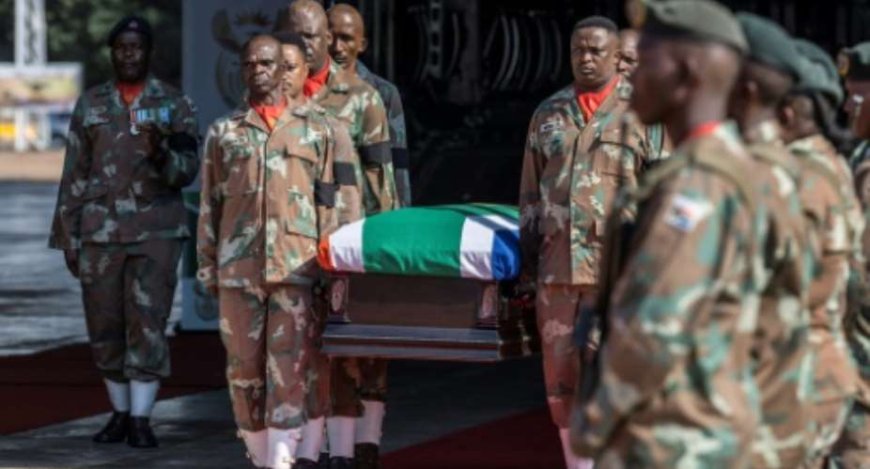
The remains of 14 South African National Defence Force (SANDF) soldiers who lost their lives in the Democratic Republic of Congo (DRC) are expected to arrive in South Africa soon. Their repatriation has faced significant delays and diplomatic hurdles, particularly regarding the route taken to bring them home. Initially scheduled to arrive on Wednesday, 5 February, the repatriation was obstructed by the M23 rebels, who have been surrounding SANDF bases near Goma and Sake.
The convoy carrying the fallen soldiers reportedly passed through Rwanda on its way to Uganda, from where they will be flown to South Africa. However, this route was met with opposition from the South African government, which expressed concerns over the involvement of Rwanda, particularly the potential for President Paul Kagame to use the situation for political propaganda. Despite this, repatriation efforts moved forward, with the remains also including three Malawians and one Tanzanian soldier who were killed in the same conflict.
The 14 SANDF members were part of the Southern African Development Community (SADC) Mission in the DRC (SAMIDRC), deployed to stabilize the region by neutralizing armed groups such as the M23. The M23 rebels, heavily backed by the Rwandan Defence Force, engaged in intense battles with SAMIDRC forces between 23 and 27 January, resulting in the deaths of 18 soldiers, including the South African, Malawian, and Tanzanian personnel.
South Africa’s opposition to repatriation through Rwanda stems from concerns that it would legitimize Kigali’s role in the conflict. Many analysts believe that forcing the use of Kigali for repatriation is a strategic move by Rwanda to control the optics of the situation. Darren Olivier, director at the African Defence Review, noted that Rwanda and the M23 could have allowed repatriation via Goma Airport but deliberately withheld that option.
While the bodies of the fallen soldiers are being repatriated, approximately 2,000 South African troops remain trapped in their bases, surrounded by M23 forces. Reports indicate that many are injured, yet negotiations for their release have been slow and uncertain.
In response, President Cyril Ramaphosa reaffirmed South Africa’s commitment to bringing its soldiers home, stating in his State of the Nation Address: “I will ensure our boys come home.”
The repatriation process is taking place just as leaders from the SADC and East African Community (EAC) are set to convene in Dar es Salaam to discuss the escalating crisis in eastern DRC. The summit is expected to bring together key figures, including DRC President Felix Tshisekedi, Rwandan President Paul Kagame, President Ramaphosa, Tanzanian President Samia Suluhu Hassan, and Ugandan President Yoweri Museveni.
The primary obstacle in diplomatic negotiations remains Tshisekedi’s refusal to engage directly with M23, whom he views as Rwandan proxies. Conversely, Kagame argues that the M23 represents an ethnic Tutsi minority in the DRC who have longstanding grievances. The SADC has firmly backed Tshisekedi’s position, calling for Rwanda to withdraw from the region, while the EAC supports Kagame’s call for negotiations between the DRC and M23.
The outcome of this summit may determine the next phase of regional intervention in the DRC, as well as the fate of the remaining SANDF troops still stationed there. As diplomatic tensions rise, the return of the 14 fallen soldiers serves as a painful reminder of the complex and volatile nature of the conflict in eastern Congo.