South Africa’s 2025 Budget Passed – But At What Cost?
 Tshepo Mavhungu
South Africa’s Parliament has passed the controversial 2025 national budget, but the battle over its contents is far from over. With 192 votes in favor and 182 against, the narrow victory has exposed deep fractures within the Government of National Unity (GNU), setting the stage for intense political wrangling in the months ahead.
The budget introduces a 0.5 percentage point VAT increase, set to take effect on May 1, 2025, with another 0.5% hike expected in 2026. This decision, aimed at addressing a R60 billion fiscal shortfall, has sparked fierce debate across the country.
While the government argues that the increase is necessary to fund critical investments in healthcare, education, and social services, critics claim it will disproportionately impact struggling South Africans, making basic goods and services even more expensive. Consumer rights groups warn of a growing cost-of-living crisis that could push more households into financial distress, especially those already battling the high costs of food and transportation.
The Democratic Alliance (DA), which voted against the budget, has challenged the approval process, calling it flawed and unconstitutional. The party has vowed to take the issue to court, hoping to block the VAT increase and force a review of the government’s economic approach.
“This budget was rushed through without proper oversight,” said DA Federal Chairperson Helen Zille. “We will not allow South Africans to suffer because of reckless governance.”
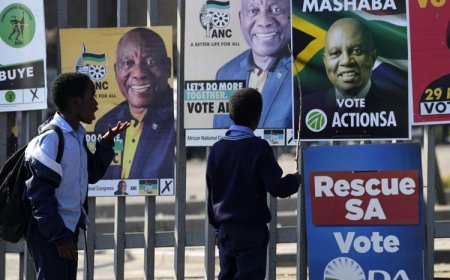
As a legal battle looms, ActionSA, another key player in the GNU, has also voiced opposition to the VAT hike, making it clear that blocking the increase is its immediate priority. The party’s leader, Herman Mashaba, has warned that if the DA leaves or is expelled from the coalition, ActionSA may reconsider its own position in the GNU.
“If the GNU fails to prioritize the people over politics, we will be forced to rethink our stance,” Mashaba said.
The passing of the budget has sent shockwaves through financial markets, with the Johannesburg Stock Exchange’s Top-40 index falling 3.3% and the rand slipping 2.6% against the U.S. dollar. Investors are closely watching the political instability within the GNU, fearing that internal divisions could derail efforts to stabilize the economy. The budget's approval comes amid an ongoing economic slowdown, rising unemployment, and significant poverty levels across the country.
In addition to the VAT increase, the budget introduces tax relief for businesses, reducing corporate tax rates by 2%. While this move aims to attract foreign investment and stimulate the economy, critics argue that it may be insufficient in addressing South Africa’s mounting debt and social inequalities. Meanwhile, funding for key public sectors, particularly healthcare and education, has seen notable increases, as the government attempts to tackle the country’s deep social challenges.
With legal challenges ahead and the coalition’s future uncertain, South Africans are left wondering: Will this budget be the catalyst for the country’s much-needed recovery, or the spark that ignites further turmoil?