Thabo Bester Shocks Court with Plea for Death Penalty Amid Claims of Inhumane Prison Conditions
 Mulaudzi Ndivhuwo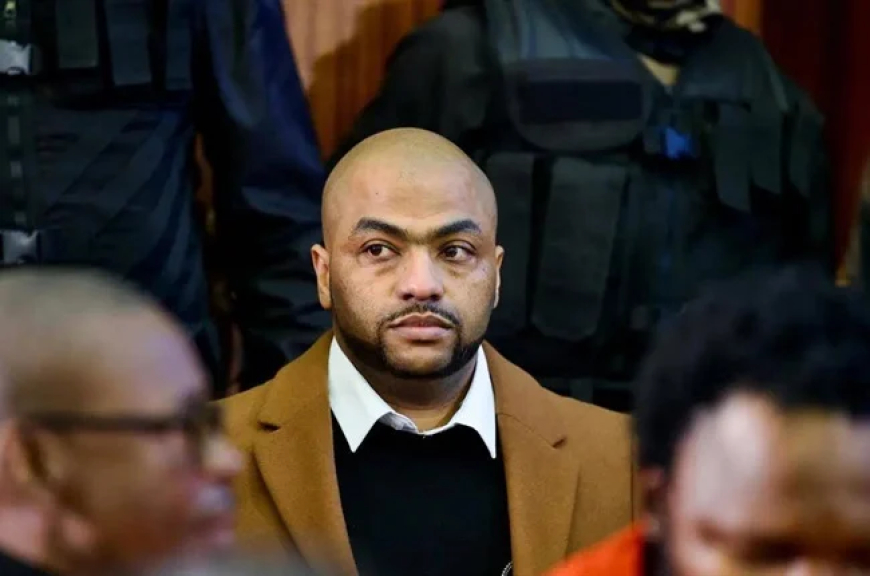
Thabo Bester, the notorious criminal known as the "Facebook Rapist," has petitioned the court to sentence him to death. Bester, currently serving a life sentence for rape, murder, and fraud, addressed the court directly, claiming that the conditions he is enduring in prison are inhumane. He further alleged that no lawyer is willing to represent him publicly due to fear of media backlash.
Bester's plea has left many in shock, igniting a fierce debate over the state of South African prisons and the ethics of the death penalty. During his appearance, Bester stated unequivocally, "Should the petition come back positive, I would accept to be executed." His demand for a public petition to determine his fate is unprecedented, reflecting both his desperation and the extreme nature of his request.
Bester's complaints about the conditions in prison are not entirely new. Inmates across South Africa have long reported issues such as overcrowding, violence, and inadequate healthcare. However, Bester's high-profile case brings renewed attention to these systemic problems. His assertion that his treatment is "inhuman" adds a personal and urgent dimension to the broader issues within the penal system.
Human rights organizations have repeatedly called for reforms, emphasizing that even those convicted of serious crimes deserve to be treated with dignity. The Constitution of South Africa guarantees the rights of all individuals, including prisoners, to humane treatment and conditions.
The request for a death sentence introduces complex legal and ethical questions. South Africa abolished the death penalty in 1995, following the end of apartheid, with the Constitutional Court ruling it as unconstitutional. Bester's plea challenges this foundational legal principle, raising the question of whether a court could or should consider such a request under any circumstances.
Legal experts are divided on the issue. Some argue that Bester's request is a manipulative ploy, while others believe it highlights severe flaws in the prison system that need urgent addressing. Regardless, the court's decision on whether to entertain Bester's plea could set a significant precedent.
The media's role in Bester's situation cannot be understated. His claim that lawyers fear media attacks if they represent him underscores the intense public scrutiny surrounding his case. Bester's crimes, particularly his use of social media to lure his victims, have made him a figure of intense public and media interest. This attention, while understandable given the severity of his actions, complicates his access to legal representation and a fair judicial process.
Public reaction to Bester's plea is likely to be polarized. Victims' advocates may see it as an attempt to escape justice, while others might view it as a cry for help from a system that is failing to uphold basic human rights standards.
As the court deliberates on how to handle Bester's plea, it faces a formidable challenge. It must balance the legal framework that abolished the death penalty with the urgent need to address claims of inhumane treatment in prisons. Furthermore, it must navigate the intense media scrutiny that has characterized Bester's case from the beginning.
Regardless of the outcome, Bester's plea has cast a spotlight on the conditions within South African prisons and the broader issue of how society treats its most reviled criminals. It serves as a stark reminder of the ongoing need for prison reform and the complex interplay between justice, human rights, and public perception.