Durban High Court Dismisses with costs the ANC Case Against MK Party
 Bradley Chagoya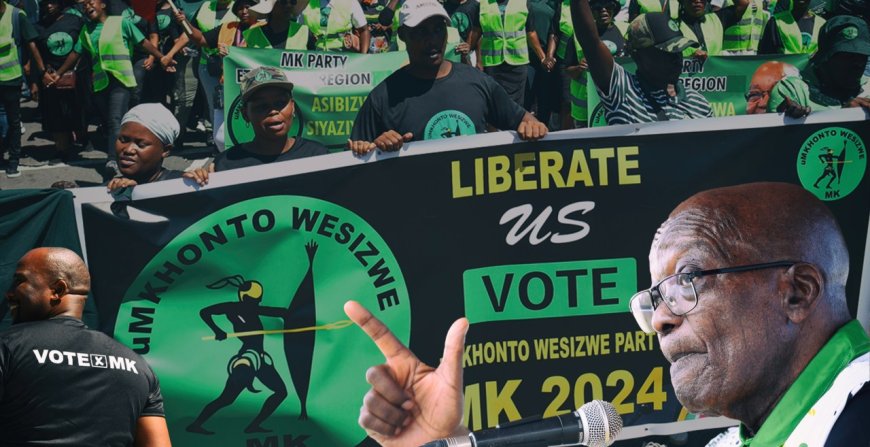
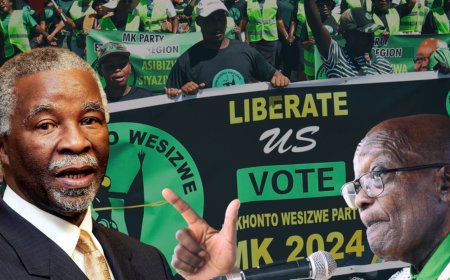
Durban : The High Court has delivered a blow to the African National Congress (ANC) by dismissing its case against the MK Party. The case, which was brought forth by the ANC, aimed to bar the MK Party from utilizing its current name and logo. The ANC argued that the MK Party's branding infringed upon the copyrights of its veteran military wing, the Umkhonto weSizwe.
The dispute, echoing deep-rooted ideological and historical divisions within South Africa's political landscape, has drawn attention not only from party faithfuls but also legal observers keen on the intersection of intellectual property and political identity.
The MK Party, an entity closely aligned with the legacy of Umkhonto weSizwe, has emerged as a notable presence, advocating for a range of issues, including socio-economic justice and veteran affairs. Its name and emblem, evoking the struggle against apartheid, carry significant symbolism for many South Africans who identify with the liberation movement.
The legal contestation, however, brought to light the complex entanglement of legal rights and political legacies. While the ANC sought to safeguard what it perceives as its proprietary rights over the symbols associated with Umkhonto weSizwe, the MK Party countered with arguments emphasizing its historical continuity and the right to honor its heritage.
In rendering its decision, the Durban High Court weighed these arguments and ultimately sided with the MK Party, rejecting the ANC's claims of copyright infringement. The ruling underscores the judiciary's role in balancing competing interests, including the protection of intellectual property rights and the preservation of political expression and identity.
For the ANC, the court's decision represents a setback in its efforts to assert control over symbols closely associated with its historical struggle against apartheid. It also highlights broader challenges facing the party as it navigates internal divisions and contends with evolving political dynamics in contemporary South Africa.
In contrast, the MK Party celebrates the court's ruling as a validation of its legitimacy and a reaffirmation of its right to exist as an independent political entity. The verdict strengthens its position as a voice for those who continue to advocate for the principles and ideals of the liberation movement.
As South Africa grapples with the complexities of its past and charts a course for its future, the outcome of this legal battle serves as a poignant reminder of the enduring significance of symbols and the contested terrain of memory and representation in the country's political landscape.