VAT Hike Ditched Amid Political and Public Pressure
 Tshepo Mavhungu
In a significant policy reversal, the South African government has officially withdrawn its proposed increase in Value-Added Tax (VAT), which was scheduled to take effect on May 1, 2025. The decision follows intense political opposition and widespread public concern over the potential economic impact of the hike.
The National Treasury had initially proposed a phased VAT increase raising the rate by 0.5 percentage points in 2025 and an additional 0.5 percentage points in 2026 to address a projected R75 billion revenue shortfall over the medium term. However, the plan faced strong resistance from key political parties, including the Democratic Alliance (DA) and ActionSA, as well as civil society organizations and the general public.
ActionSA leader Herman Mashaba welcomed the government's decision, stating, "The reversal of the VAT increase is a victory that belongs to you, the people of South Africa, and to our maturing multi-party democracy."
The DA also played a pivotal role in opposing the VAT hike, challenging the proposal in court and voting against the fiscal framework in Parliament. The party argued that the increase would disproportionately affect low-income households already burdened by high unemployment and economic hardship.
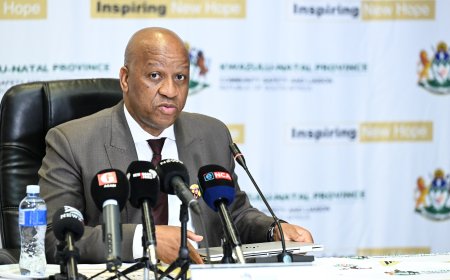
Finance Minister Enoch Godongwana acknowledged the concerns raised and confirmed that VAT would remain at 15%. He announced plans to introduce revised budget legislation in the coming weeks to address the revenue shortfall through alternative means.
The withdrawal of the VAT increase has been met with cautious optimism by economists and market analysts. Following the announcement, the South African rand experienced a slight uptick, trading at 18.66 against the U.S. dollar, reflecting investor confidence in the government's responsiveness to public and political concerns.
This reversal marks a critical moment in South Africa’s democratic evolution a powerful reminder that when citizens and political leaders unite in purpose, government policy can be reshaped to reflect the will of the people.